

What Is Mohs Surgery? A Complete Guide to the Most Precise Skin Cancer Treatment

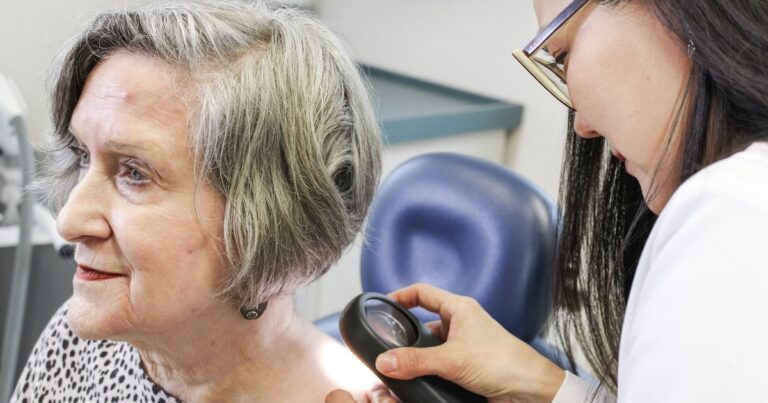
If your dermatologist has recommended Mohs surgery — or if you’re researching options after a skin cancer diagnosis — you probably want a clear, honest answer to a simple question: what actually happens, and does it work?
This guide walks you through exactly what Mohs surgery is, how it works step-by-step, the cancers it treats best, what recovery looks like, and how it compares to other skin cancer treatments. Everything here is grounded in guidance from leading institutions including Johns Hopkins Medicine, the Cleveland Clinic, Yale Medicine, and peer-reviewed research published by the National Institutes of Health.
Mohs surgery is a precise, microscope-guided technique for removing skin cancer one thin layer at a time. The surgeon checks each layer for cancer cells in real time and only removes more tissue if cancer is still present. It is highly effective, with cure rates of up to 99% for many common skin cancers, because it allows the edges of the cancer to be evaluated more thoroughly than traditional excision techniques.
In practical terms: it removes all the cancer while sparing as much healthy skin as possible — which is why it’s the preferred option for cancers on the face, ears, nose, lips, and hands.
How Mohs Surgery Actually Works
The technique is named after Dr. Frederic Mohs, who developed it in the 1930s. What sets it apart from a standard skin cancer excision isn’t the cutting — it’s the microscope work that happens during the procedure rather than days later.
Here’s the core idea: in a typical excision, a surgeon cuts out the visible tumor plus a margin of healthy-looking skin and sends the sample to a pathology lab. You wait days for results. With Mohs, the surgeon and pathologist are the same person, working in the same building, on the same day. The dermatologist (Mohs surgeon) acts as both surgeon and pathologist, from the preoperative considerations until the reconstruction. This dual role requires extensive specialized training, which is why it’s worth choosing a fellowship-trained Mohs surgeon for your procedure.
Each removed layer is mapped, frozen, sliced, stained, and examined under a microscope. The method allows for the complete examination of 100% of the surgical margin — meaning the surgeon can see whether any cancer cells are touching the edge of the tissue removed. If so, they go back and take more tissue, but only from the exact spot where cancer remains.
The result is two-fold:
- Nothing cancerous gets left behind. Skin cancers can have microscopic “roots” that extend beyond what the eye can see — Mohs catches them.
- Nothing healthy gets removed unnecessarily. This matters enormously on the face, where every millimeter of preserved tissue affects the cosmetic outcome.
What Skin Cancers Does Mohs Surgery Treat?
Mohs is most commonly used for the two most prevalent forms of skin cancer:
- Basal cell carcinoma (BCC) — the most common skin cancer, often appearing as a pearly bump or persistent sore
- Squamous cell carcinoma (SCC) — the second most common, which can look like a scaly red patch or wart-like growth
The procedure is also increasingly used for melanoma in certain forms (a variation called “slow Mohs” is used for some melanomas) and for precancerous lesions that show high-risk features. To learn more about the warning signs to watch for, see our related articles on early skin cancer detection.
Your dermatologist is most likely to recommend Mohs when:
- The cancer is on a cosmetically or functionally sensitive area — face, ears, nose, lips, eyelids, hands, feet, or genitals
- The tumor has irregular or aggressive borders that are hard to see clearly
- The cancer has come back after a previous treatment
- The tumor is large or growing quickly
- You have a weakened immune system that makes complete removal critical
What to Expect on the Day of Surgery
One of the most reassuring things about Mohs is how routine it actually is. It’s an outpatient procedure done under local anesthesia — you’re awake, you go home the same day, and you don’t need general anesthesia or sedation.
Most patients have already had a skin biopsy confirming the diagnosis before scheduling Mohs. Here’s what a typical Mohs day looks like:
- Numbing and the first removal. Your surgeon injects local anesthetic around the cancer site. Once the area is numb, they remove the visible tumor along with a thin layer of surrounding skin. This usually takes only a few minutes.
- The wait. Your wound is bandaged temporarily and you head to a waiting area. The tissue, meanwhile, goes to an in-house lab where it’s frozen, sliced into thin sections, mounted on slides, and stained. The step-by-step removal of cancerous tissue is followed by immediate microscopic examination of each layer until no cancer cells remain. This processing typically takes 30 minutes to an hour per layer.
- The microscope check. Your surgeon examines the slides. If cancer cells are visible at the edges of the removed tissue, they map exactly where on the wound the remaining cancer is.
- More layers, if needed. If cancer is still present, you go back, get more anesthetic if needed, and the surgeon removes another thin layer — but only from the specific spot where cancer was found. The process repeats.
- Closure or reconstruction. Once the tissue is clear of cancer, your surgeon either stitches the wound closed, lets it heal on its own (called healing by secondary intention), or performs a small reconstruction using a skin flap or graft if the wound is larger.
Plan for the whole process to take a full day. Most patients need one to three rounds, but it’s impossible to predict exactly how many in advance — which is why you should clear your calendar and bring a book, snacks, and someone to drive you home.
How Effective Is Mohs Surgery?
This is where Mohs really stands out. The cure rates are the highest of any skin cancer treatment available, according to research published by the NIH:
- For new (primary) basal cell carcinoma: up to 99% cure rate
- For recurrent basal cell carcinoma: up to 94%
- For new squamous cell carcinoma: 95% to 99%
- For recurrent squamous cell carcinoma: around 90%
For comparison, standard excision achieves about 93 to 95 percent cure rates for basal and squamous cell carcinomas in high-risk areas like the face, while Mohs achieves 98 percent. That difference may sound small, but on a cancer that has a real chance of returning, those percentage points matter.
One important caveat your dermatologist will likely mention: if you have one basal cell skin cancer, you have about a 40 percent chance of developing another one in the next five to 10 years. Cure for this cancer doesn’t mean immunity to future cancers, so regular full-body skin exams are non-negotiable after Mohs. The Skin Cancer Foundation recommends an annual professional skin check at minimum.
Recovery: What the Healing Process Actually Looks Like
Recovery is generally straightforward, but it does require attention. Here’s a realistic timeline:
The first 24–48 hours. You’ll go home with a pressure bandage that you should leave in place. Some bleeding, swelling, and bruising is normal. Pain is usually mild and manageable with acetaminophen (your surgeon will tell you whether to avoid aspirin or ibuprofen, which can increase bleeding). Ice over the dressing for short intervals helps with swelling.
Days 2–7. You’ll start changing the bandage, gently cleaning the wound, and applying petroleum jelly to keep it moist. Stitches are typically removed 7 to 10 days after surgery. Most people can return to non-strenuous work within a day or two.
Weeks 2–4. The wound continues to close and a scab or pink scar forms. Avoid heavy lifting and strenuous exercise for at least the first week to reduce bleeding risk.
Months 1–3. Nearly 90% of Mohs surgery sites are fully healed by 2 months post-op, with neck, hand, and foot wounds taking 10–15% longer on average compared to facial wounds. Scars continue to fade and flatten over the following year.
Long term. Sun protection on the scar is essential — sunscreen with SPF 30 or higher, plus a hat for outdoor time. Patients with accumulated sun damage should be especially diligent. Once healed, gentle scar massage and silicone gel sheets can help minimize the final appearance.
Smoking, diabetes, and certain medications can slow healing, so be honest with your surgeon about your full medical history.
Risks and Complications
Mohs is considered very safe, but no surgery is risk-free. Possible complications include:
- Bleeding, especially in the first 48 hours
- Infection, which is uncommon but possible — watch for increasing redness, warmth, pus, or fever
- Scarring, which is unavoidable but typically minimized by the tissue-sparing approach
- Numbness or tingling near the surgical site, often temporary but occasionally permanent if a small nerve is affected
- Wound reopening if you’re too active too soon
Most complications are minor and treatable in the office. Serious complications are rare. The American Academy of Dermatology provides additional patient guidance on skin cancer treatment and recovery.
Mohs Surgery vs. Standard Excision: Which Is Right for You?
Standard excision is faster, less complex, and often perfectly appropriate for skin cancers on the trunk, arms, or legs where there’s plenty of healthy skin to spare and the cancer has clear, defined borders.
Mohs is the better choice when precision matters more than speed — high-risk areas, recurrent cancers, aggressive tumor types, or any situation where preserving healthy tissue is critical.
In some cases, particularly for elderly patients or those who aren’t surgical candidates, superficial radiation therapy (SRT) is offered as a non-surgical alternative. The right treatment depends on the cancer’s type, location, size, and your overall health profile.
The decision isn’t about which technique is “better” overall. It’s about which technique fits your specific cancer, in your specific location, given your specific goals. A good board-certified dermatologist will explain why they’re recommending one over the other.
Frequently Asked Questions
Will I be awake during Mohs surgery? Yes. The procedure is done under local anesthesia, so the area is numb but you’re fully conscious. Most patients describe it as similar to a dental procedure.
How long does Mohs surgery take? Plan for a full day, even though the actual cutting only takes a few minutes per round. The waiting time during lab processing is what extends the day.
Does Mohs surgery hurt? The injection of anesthetic stings briefly. After that, you shouldn’t feel pain during the procedure itself. Mild discomfort during recovery is normal but usually manageable with over-the-counter pain relievers.
Will Mohs surgery leave a scar? Yes — any surgery leaves a scar. But because Mohs spares the maximum amount of healthy tissue, the scar is typically smaller than it would be with a standard excision, and skilled reconstruction can make it remarkably inconspicuous over time.
Is Mohs surgery covered by insurance? For medically necessary skin cancer treatment, Mohs is generally covered by Medicare and most private insurance plans. Verify with your specific insurer beforehand or contact our office and we can help check your coverage.
Can my skin cancer come back after Mohs? The chance is low but not zero. Cure rates of 94–99% mean 1–6% of patients see the original cancer return. More commonly, patients develop new skin cancers elsewhere — which is why ongoing skin checks every 6 to 12 months are important.
The Bottom Line
Mohs surgery exists because skin cancer doesn’t always behave the way it looks. What appears to be a small spot can have invisible roots, and what’s been treated once can come back. Mohs solves both problems by combining surgery and pathology into a single, real-time process — leaving no guesswork about whether the cancer is fully gone.
If your dermatologist has recommended Mohs, it’s almost certainly because the location, type, or behavior of your cancer makes precision more important than convenience. Ask questions, understand the timeline, and trust the technique — it’s earned its reputation as the gold standard for a reason.
If you’re noticing a new or changing spot on your skin, don’t wait. Early detection makes every treatment, including Mohs, more straightforward and more successful. Schedule a skin exam with Campbell Dermatology & Aesthetics to get expert evaluation and peace of mind.
This article is for general informational purposes and is not a substitute for personalized medical advice. Always consult a board-certified dermatologist about your specific diagnosis and treatment options.